
What is the Difference Between a Flat and an Apartment
Over the last few years, Kerala’s housing market has shifted from independent houses to apartments and flats, especially in major cities. Growing infrastructure, urbanization, and rising land prices have pushed buyers and investors toward this choice. This scenario has encouraged developers in Kerala to launch a wide range of residential projects catering to different budgets and lifestyles. As a result, flats and apartments currently exist as the practical and affordable housing options for first-time buyers in Kerala’s housing market. Despite this growing familiarity, people often use the terms "flat" and "apartment" interchangeably in everyday conversations and property listings without much concern. Both terms describe units within a larger building, but subtle differences exist in their actual meanings and usages. Wondering whether to use the term “flat” or “apartment”? In this blog, we’ll go through the differences between flats and apartments. By understanding these subtle distinctions, buyers and investors can gain a clearer picture of the real estate market and make confident decisions when choosing a residential space.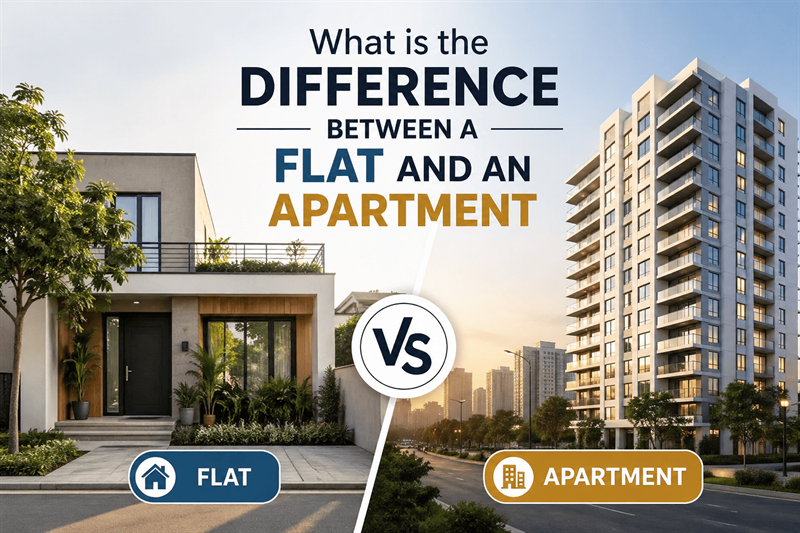
Many property professionals explain the difference between flats and apartments based on how buildings are designed and how space is used. To be more definitive, a flat is typically described as a self-contained living space that occupies one level within a building. Flats come with practical layouts focused on essential living requirements such as bedrooms, kitchen, bathrooms, and a living area. They are often found in residential blocks that prioritize efficient space use.
An apartment, on the other hand, is often regarded as a broader category of urban lifestyle that includes both the basic residential unit and the additional amenities that come with it. This might mean larger floor plans, multiple bedroom configurations, and careful planning of aspects like natural light and ventilation. The distinction can be subtle, but architects and developers sometimes use the term “apartment” to indicate a more refined design concept compared to a strictly basic and functional flat.
Amenities and Building Facilities
One of the more practical and readily apparent ways buyers can separate flats from apartments is by looking at the building facilities and amenities. Flats are usually part of buildings that offer the basic needs of residents, such as shared entrances, security, staircases, and sometimes elevators. In many cases, common amenities may be limited, focusing on straightforward community living without unnecessary extras.
Apartments are often associated with more extensive facilities and services. In most modern development projects, apartment buildings facilitate access to features like dedicated parking, advanced security systems, clubhouses, fitness areas, landscaped gardens, and more. These facilities are designed to offer added convenience and lifestyle comfort beyond the core residential unit.
While such an arrangement does not mean that all apartments have premium facilities or that all flats lack them, the general expectation among buyers and investors is that apartment communities offer a broader range of organized services.
Maintenance, Management, and Community
Upkeep is another important difference between flat and apartment living. Apartments are often managed through a residents’ association or a professional facility team. Shared amenities such as clubhouses, gyms, landscaped gardens, and security systems require regular maintenance, which is typically funded through a monthly maintenance fee. This structured approach sets a standard for professional building maintenance and promotes a sense of community among residents.
Flats, on the other hand, tend to have minimal and self-managed maintenance. The responsibility often falls on individual owners or residents themselves. With fewer shared amenities, the monthly upkeep charges are generally lower, but most of the responsibility for upkeep falls on the occupants. Such an arrangement makes flats more straightforward in terms of management but less unified in terms of organized community services.
Get expert insights on land valuation in Kerala – read guidance from our property specialists today to understand the fair value of your land and make informed decisions.
Lifestyle and Market Perception
In practical use, people tend to associate flats with basic, no-frills accommodation that meets essential living needs. When property listings describe units as flats, some buyers assume a simpler setup without extensive shared facilities. Meanwhile, apartments often carry a notion of organized community living with planned spaces such as children’s play areas, fitness zones, and recreational rooms.
This perception shapes buyer expectations. First-time homebuyers, young couples, and smaller families often look at flats as a cost-effective way to own property in cities. Apartment living, especially in branded or gated developments, is frequently viewed as a lifestyle choice for those willing to invest in enhanced services and communal features. Again, these perceptions are not rigid rules, but they influence how properties are marketed and how buyers respond.
Price and Value Considerations
Price differences between flats and apartments in Kerala usually indicate the overall offering rather than the terminology itself. Units marketed as apartments in developments come with more facilities and services and may come at higher price points compared to basic flats of similar size and location. Buyers should evaluate price in relation to what they get on the ground: layout efficiency, quality of construction, building management, and community features.
Value for money depends on personal priorities. Someone prioritizing strong social infrastructure within the building and ongoing services may prefer an apartment format, while another buyer focused on straightforward ownership and lower initial costs may lean toward a flat.
Which to Choose - Flat or Apartment?
When choosing between a flat and an apartment, you should consider factors such as lifestyle, budget, and personal preferences. In simple terms:
- A flat is ideal for those who are seeking simple, cost-effective city living with minimal maintenance.
- An apartment is the perfect choice for those buyers who desire modern amenities, security, professional upkeep, and a community-centric environment.
Regardless of this choice, you must also consider factors such as location, connectivity, access to schools, healthcare, shopping, and monthly expenses.
Choosing the Right Home with Best Builders in kerala
Partnering with trusted and established builders in Kerala can provide homebuyers and investors with versatile properties designed for practical urban living. With over three decades of experience in delivering homes across the state, Home Developers has built a strong reputation in the construction and real estate sectors. They provide quality homes that are designed for modern lifestyles, set at prime locations across the state.
FAQs
Are apartments more expensive than flats?
Typically, apartments are found to be more expensive due to the availability of facilities like parking, security, gyms, and recreational areas.
Who should choose an apartment?
Apartments in Kerala are the most suitable residential choice for those looking for a space with modern amenities and a community environment.
Does the term affect property value?
No, the term does not actually affect the value. What influences property value are factors like location, construction quality, and amenities.
Yes, gated community living has become a major feature of apartments. While this is true in most cases, there are apartments that are not set in gated spaces.
Is a flat the same as an apartment in India?
While the terms are used interchangeably, the term ‘apartment’ is used to define more posh projects with more amenities.