
Understanding Maintenance Charges in Thrissur Apartments
Planning to buy apartments in Thrissur? Understand maintenance charges, included services, hidden costs, and how they affect long-term property value.
Buying an apartment involves much more than paying the purchase price. One of the most important ongoing expenses that every homebuyer should understand is the monthly maintenance charge. While many buyers focus on location, amenities, and property value, maintenance costs play a significant role in the overall cost of ownership and the long-term quality of life. If you are planning to purchase one of the apartments in Thrissur, understanding how maintenance charges work will help you make a better financial decision and avoid unexpected expenses after possession. Maintenance charges are recurring payments collected from apartment owners to maintain the common areas and shared facilities within the residential complex. These charges ensure that the building remains clean, secure, functional, and well-managed. A properly maintained apartment community offers a better living experience and helps preserve the property’s value over time. Many homebuyers underestimate the importance of maintenance fees. However, these charges directly affect the condition of the property and the comfort of residents. Regular maintenance supports: Poor maintenance can lead to deteriorating building conditions, reduced resale value, and higher repair costs in the future. The exact components vary from one residential project to another, but most maintenance charges typically cover several essential services. Common area cleaning typically includes the cleaning of lobbies, corridors, staircases, parking areas, and other shared spaces. Most apartment communities employ security personnel, CCTV monitoring, visitor management systems, and access control measures. Regular inspection, servicing, and repairs of elevators typically form part of maintenance expenses. Maintenance charges often cover the upkeep of pumps, water tanks, plumbing systems, and common water infrastructure. Generator servicing, fuel management for common areas, and electrical maintenance are frequently included. Residential projects with gardens, lawns, and landscaped areas require ongoing maintenance. Facilities such as clubhouses, gyms, swimming pools, children’s play areas, and community halls require regular upkeep and repairs. Maintenance charges are generally calculated using one of the following methods. The charge is based on the size of the apartment. Larger apartments pay higher maintenance fees. All apartment owners pay the same maintenance amount regardless of apartment size. Some communities charge a fixed amount plus an additional amount based on apartment area. Before purchasing a property, ask the developer or apartment association which method they use. Maintenance fees can vary significantly depending on the type and scale of the apartment project. Several factors influence the amount you pay. Projects with swimming pools, clubhouses, gyms, landscaped gardens, and advanced security systems usually have higher maintenance costs. Larger residential communities may benefit from economies of scale, while smaller projects may have higher per-owner maintenance costs. Older buildings often require more frequent repairs and replacements, which can increase maintenance expenses. Professional maintenance companies may charge more, but they often provide better service quality and preventive maintenance. Many apartment projects require buyers to contribute to a corpus fund or sinking fund at the time of purchase. This fund is used for major future expenses such as Understanding the corpus fund requirement is important because it is separate from monthly maintenance charges. Before purchasing an apartment, ask the developer or association the following questions: Clear answers to these questions help you estimate the true cost of apartment ownership. Yes. Maintenance charges are usually revised periodically based on operating costs and inflation. Common reasons for increases include: A well-managed apartment association generally communicates such increases transparently and maintains proper financial records. One of the biggest advantages of a properly maintained apartment complex is stronger long-term property appreciation. Well-maintained residential communities typically attract: Professional upkeep also reduces the need for expensive emergency repairs and preserves the overall appearance of the property. This is one reason many experienced buyers prefer projects developed by reputed builders in Thrissur, as established developers often focus on quality infrastructure, efficient facility management, and long-term maintenance planning. Maintenance charges are an essential part of apartment ownership and should never be treated as a secondary expense. A lower maintenance fee is not always better if it results in poor upkeep, declining facilities, or reduced property value. When evaluating flats in Thrissur, be sure to compare not only the purchase price but also the maintenance structure, the included services, and the long-term management quality. Understanding these costs in advance will help you budget accurately, avoid unexpected financial burdens, and choose a home that remains comfortable, attractive, and valuable for years to come.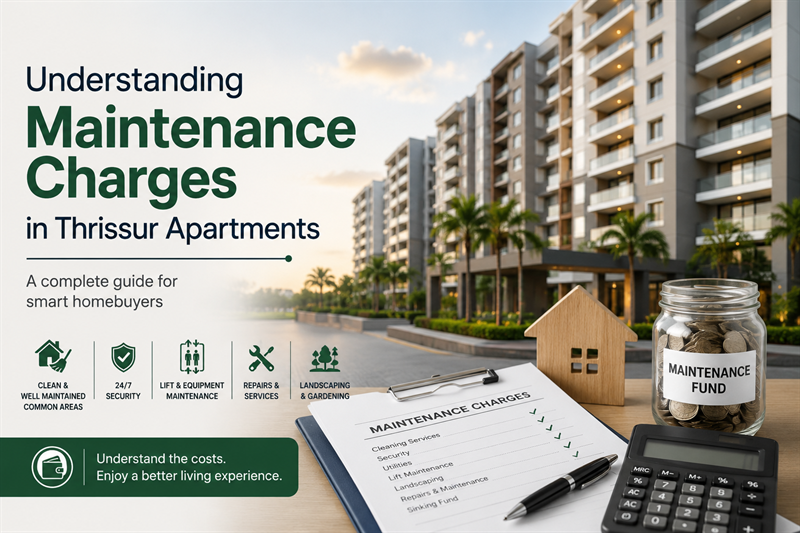
What are apartment maintenance charges?
Why are maintenance charges important?
What is usually included in maintenance charges?
Common area cleaning
Security services
Elevator maintenance
Water and plumbing systems
Power backup maintenance
Landscaping and garden maintenance
Common facility management
How are maintenance charges calculated?
Per square foot basis
Equal contribution method
Hybrid model
Factors that affect maintenance charges
Number of amenities
Size of the apartment complex
Age of the building
Facility management quality
What is a corpus fund?
Questions to ask before buying
Can maintenance charges increase?
Why well-maintained apartments have better resale value?
Final thoughts